


TERHEIJDEN, Shutterstock
Toxic Masculinity
TERHEIJDEN, Shutterstock
Who Exactly Is Having a “Crisis of Masculinity”?
From Scott Galloway to Tucker Carlson, the panic over endangered manhood isn’t helping boys — it’s enforcing the same rigid gender rules that harm everyone.
This article was made possible because of the generous support of DAME members. We urgently need your help to keep publishing. Will you contribute just $5 a month to support our journalism?
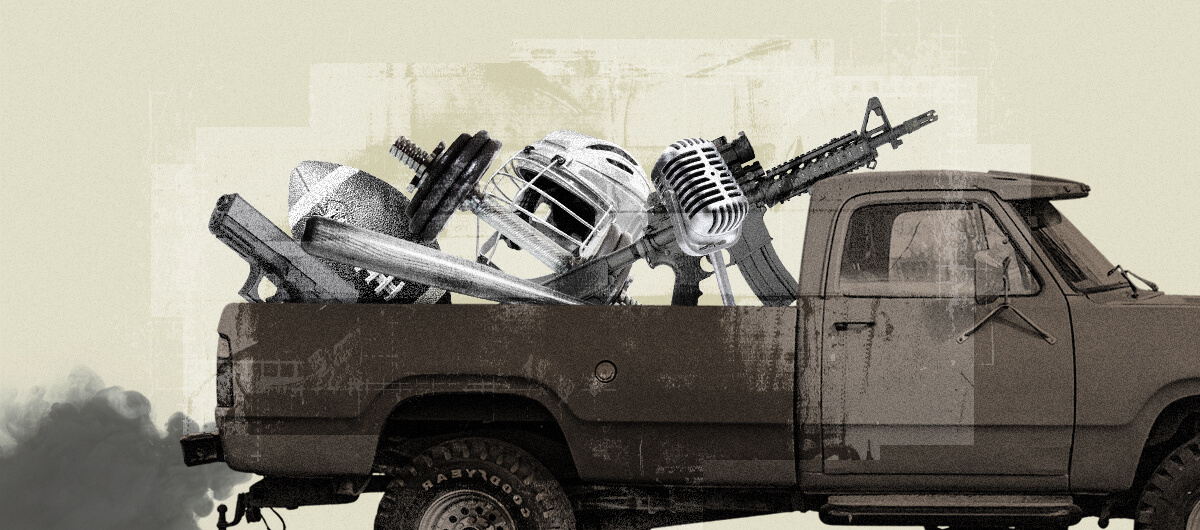
“If we can’t convince young men of the honor involved and the unique contributions inherent in expressing what makes them male, we’ll lose them to niche, rabid online communities,” writes marketing guru and podcaster Scott Galloway in his new guide to manliness, Notes On Being a Man. Galloway’s is the latest best-selling statement of the “crisis of masculinity” — the fear that boys no longer fully inhabit and embrace their cultural and biological heritage of manhood. Men, Galloway argues, should be protectors, procreators, providers; they need to be strong successful heterosexuals, competent and powerful. That is what masculinity is, and the crisis is that the culture no longer values it as it should. Men, Galloway insists, must not be shamed for being men!
As the father of a trans daughter who didn’t come out until she was 17, I am skeptical. Is our culture really telling boys that they shouldn’t be “boys”? Are boys more likely to be punished — by friends, by teachers, by parents — for being interested in sports rather than cosmetics? I think the answer there is pretty obvious — which means that doubling down on the idea that masculinity is good and right and proper may well hurt, rather than help, people of all genders.
More, More, More Masculinity
I didn’t mention cosmetics there by accident. In retrospect, one of the early tip-offs that my trans daughter was trans was her love of makeup. In seventh grade, some years before she came out and transitioned, my daughter came home from hanging out with a bunch of girlfriends with her face completely done up: lipstick, eyeliner, foundation, the works. “Oh my god!” she said. “That was so much fun!” She was about as happy as I’d ever seen her.
My wife and I told her she looked great. My wife helped her remove the makeup when she was ready to take it off. We absolutely did not tell her that there was anything wrong with her. If she was pleased, we were pleased. We didn’t yet know she was trans, but we knew that she should have the right and the opportunity to explore her own gender expression. If that meant wearing makeup, then it meant wearing makeup.
I don’t know for sure how Scott Galloway would have responded in this situation — he doesn’t express the kind of venomous sentiments toward trans people that fellow masculinity-minder Jordan Peterson does. He doesn’t really talk about trans people, men or women, at all, just as he doesn’t have much to say about any expression of femininity, by people of any gender — except insofar as femininity is the unexpressed creeping danger which might come for you as a man if you aren’t doing sufficient protecting, procreating, and providing.
Mistrust of femininity and concern that it might be eroding masculinity is by no means unique to Scott Galloway. California Democratic Governor Gavin Newsom hit many of the talking points recently in a CNN appearance where he argued that men are facing high suicide and dropout rates because Democrats “walked away from this crisis of men and boys.” Right-wing pundit Ross Douthat chimed in, arguing (in line with an essay by his guest Helen Andrews) that “feminism has failed us because it’s made our institutions too feminized, driving men and masculine virtues out.” Tucker Carlson claims that we can save masculinity if only more men and boys would start tanning their testicles to increase their testosterone.
None of these arguments holds water, though. Newsom fails to talk about the connection between guns and male suicide, which undermines his argument that Democratic priorities, like gun control, fail men. Douthat had to change the title of his article from “Did Women Ruin the Workplace?” to “Did Liberal Feminism Ruin the Workplace?” because the original made the misogyny too obvious even for the ghouls in editorial at the New York Times. And as for Tucker Carlson — no, tanning your testicles does not make you more of a man. Not sure what else to say about that. For pity’s sake.
In any case, the point-by-point refutation is less important than the common ideological ground. Whether Democrat, vaguely respectable Republican, bizarre conspiracy theorist Republican, independent podcaster, all agree that men are harmed when masculinity is denigrated or questioned or when it is shifted from the center of politics and culture. We must cease being “averse to identifying and celebrating what’s good about men and masculinity,” in Galloway’s words. Instead we should “acknowledge how extraordinarily important, skilled, strong, and decent most young men were carrying out the roles they played in helping create the world we live in.”
Are we really lacking in male role models and examples of masculine virtue, though? There are still an awful lot of action movies in which manly men do manly things, often with guns, sometimes with super powers. All our presidents have been men; 90% of billionaires are men, as are 93% of Nobel laureates. The most high-profile professional athletes overwhelmingly are men, despite the growth of women’s soccer and basketball. It sure seems like men have a lot of masculine role models compared to women. If masculinity is so denigrated, why are men the ones with disproportionate power and representation?
In her classic 2007 book, Whipping Girl, transfeminist and biologist Julia Serano argues that, in fact, masculinity is not denigrated. Masculinity is worshipped; it is femininity that people hate. Douthat’s worry that femininity is corrupting the workplace and Galloway’s insistence that masculinity can never do harm are not some sort of brave contrarianism; they’re the status quo.
As Serano points out, femininity is seen as “weak, artificial, frivolous, demure, and passive”; to be feminine is to be debased, broken, subordinate, decadent. She argues further that the demand to revere masculinity is itself driven by the loathing of femininity. “Male pride is not really about pride,” Serano writes. “It’s about fear—the fear of being seen as feminine. And that’s why ‘girl stuff’ [like, say, cosmetics] is so dangerous. And as long as most men remain deathly afraid of it, they’ll continue to take it out on the rest of us.”
The hyperbolic fear that trans women will harm cis women in bathrooms, the hyperbolic fear that trans women will harm cis women in women’s sports (both of which have no basis in fact) are presented as being based in fears of masculinity, but they are in fact a terror of femininity overtaking and subverting male identities. Femininity out of place, femininity overwriting masculinity, is the danger — which is why trans women are seen as the threat, even though cis men are much, much more likely to assault cis women (or cis men, or trans people, for that matter.)
Masculinity Oppresses Everyone, Including Men
The idea that masculinity in all its forms (strength, decisiveness, cars, action movies, basketball) is better than femininity (perceived weakness, domesticity, dolls, romcoms, ballet) affects everyone. But it becomes even more visible than usual when you have a trans daughter.
My wife and I were both very aware of trans and queer issues before my daughter came out. Even before we knew she was trans, we tried our best to assure her that we wanted her to be herself, whoever that self happened to be.
Parents aren’t the only influence on kids, though, and my daughter, like all children, had to navigate a lot of pressures and ideas from peers and other adults about what her gender was supposed to be. In elementary school, when she was watching Frozen with a couple of friends, one boy complained that the protagonist was a girl. Our daughter, we were glad to hear, argued that girl protagonists were good.
In sixth grade, our daughter’s male friends were all obsessed with who did and did not have six-pack abs — my daughter did not, and was somewhat sheepish about it. In seventh grade, the kids mostly gender segregated their friend groups — except for my daughter, who hung out with both the girls and the boys in about equal measure. In eighth grade, the class put on a performance of Midsummer’s Night’s Dream—and my daughter begged for the part of Hermione.
We were thrilled to have our daughter play Hermione and to have her hang out with the girls as well as the boys; we were supportive when she began to occasionally wear dresses a couple years later. She suggested she might be queer a couple years before coming out as trans, and we talked about queer and trans issues with her, watched queer romcoms with her, let her know that her mother was bisexual and had had positive experiences with queer community; advocated for queer-friendly policies at her school.
But despite all of that, my daughter still spent years in misery because the cultural demands to be masculine were so rigid and powerful. She was concerned that being trans would damage her theater career and make it more difficult for her to get the leading Shakespeare roles she dreamed of performing. (She was right about that.) And she agonized over how she imagined her peers would react. In fact, when she began to test the waters and tentatively came out to a trans male friend, he dismissed her, telling her she was not really a woman. My daughter was hurt, and tried to figure out why he would say such a thing, later speculating that he may have felt that being surrounded by too many trans people made him feel less special. Trans people are also affected by the cultural devaluation of masculinity, and by the idea that no one should want to be a woman. In any case, my daughter went back in the closet for a year. (So much for trans contagion theories.)
My daughter did eventually, and courageously, come out, and she is much happier for it. I’m sure many people would dismiss her experiences as atypical or as irrelevant to boys’ experiences of masculinity.
But my daughter is hardly the only person to have been made miserable by her refusal to conform to masculinity. It isn’t just trans women and girls who are targeted by the cultural devaluation of masculinity. Gay men and boys are, since they (supposedly) fail to fulfill that masculine demand to dominate women and procreate. Obese men and boys are, since they don’t conform to that six-pack sixth-grader image of masculine bodies. Disabled men and boys are, since they (supposedly) fail to fulfill that masculine ideal of strength. Boys, like me, who aren’t very good at sports are often considered to have failed at masculinity. Boys and men like me, who didn’t date much (or at all) in high school and college are considered to have failed at masculinity. And what about boys who have breasts, who are intersex, who are trans? They are teased, or despised — or written out of conversations on masculinity altogether. Thus, while trans women are hypervisible, trans men are often ignored or erased.
Men — and not just men! — have a wide variety of bodies, personalities, aptitudes, and interests. Yet, the patriarchal ideal of masculinity judges them all by the same standard. That makes so many of us miserable. Think of the kids who were bullied when you were growing up. Were they singled out for being too masculine? I know I was bullied for being too intellectual, too Jewish looking, too neurodivergent, insufficiently athletic — all things coded, to one extent or another, as feminized and unmanly.
Boys — and, one more time, not just boys — are under a great deal of pressure to conform to and perform masculinity. The crisis of masculinity panic is not a solution to that; it is an extension of it. Maybe instead of repeating over and over, louder and louder, that boys need to be masculine, we could instead let all kids know that they are allowed to express their gender in a whole range of ways.
If that’s playing sports, great! If it’s wearing makeup, great! If it’s wearing makeup while playing sports, that’s great, too. But we shouldn’t let Gavin Newsom or Scott Galloway or Ross Douthat or (god forbid) Tucker Carlson or anyone dictate that it’s more acceptable for boys to wear a dress than to play baseball. It is not. Which means that the moral panic over the devaluation of masculinity is just another way to enforce patriarchy, and to demand that boys, and everyone, shore up the same structure that has brought us here, to this moment, when we are ruled by the worst orange patriarch in the world.
Before you go, we hope you’ll consider supporting DAME’s journalism.
Today, just tiny number of corporations and billionaire owners are in control the news we watch and read. That influence shapes our culture and our understanding of the world. But at DAME, we serve as a counterbalance by doing things differently. We’re reader funded, which means our only agenda is to serve our readers. No both sides, no false equivalencies, no billionaire interests. Just our mission to publish the information and reporting that help you navigate the most complex issues we face.
But to keep publishing, stay independent and paywall free for all, we urgently need more support. During our Spring Membership drive, we hope you’ll join the community helping to build a more equitable media landscape with a monthly membership of just $5.00 per month or one-time gift in any amount.